






 Skip to main content
Area: 18.6 km²
Population: 448
Altitude: 383m a.s.l.
Geographic coordinates: 39°34′52.32″N 9°16′58.08″E
Patron Saint: Saint James
Located in the historic Gerrei region, in the south-eastern part of Sardinia, Goni offers an atmosphere of tranquillity and carefree serenity among unspoilt woodland and myrtle-scented Mediterranean scrubland. The Flumendosa river and Lake Mulargia provide enchanting panoramas with hues shifting from green to blue.
The magnificent Pranu Muttedu Archaeological Park tells the story of the territory before the rise of Nuragic civilisation. Among rugged rocks and centuries-old trees, a Neolithic village, a necropolis of domus de janas (the typical artificial underground tomb-chambers of Sardinian prehistory, used for burials), and the largest concentration of menhirs in Sardinia — large elongated stones embedded in the ground — can be identified. On the rock face of Genna Accas, a second group of domus de janas tombs can be found, finely carved into the rock, alongside which three stone circles used as places of worship are discernible. The area also contains the remains of the megalithic covered gallery tomb (allée couverte) of Baccoi.
The most important Nuragic evidence in the area is the Nuraghe Goni: situated on a plateau, it features an imposing structure consisting of a single tower built from limestone blocks, around which the remains of a perimeter wall and circular-plan Nuragic huts can be observed. Signs of the Nuragic period are also found in the locality of Domus Suas, where various buildings are preserved, including a nuraghe and a probable giants’ tomb. Places such as the Nuraghe Goni and the domus de janas, rich in charm and mystery, have always been the subject of popular legends. It was said that the nuraghe was the dwelling of a terrible ogre, and that the domus de janas were inhabited by enchanted beings in the likeness of small women: receiving a visit from them was considered a good omen for the whole family.
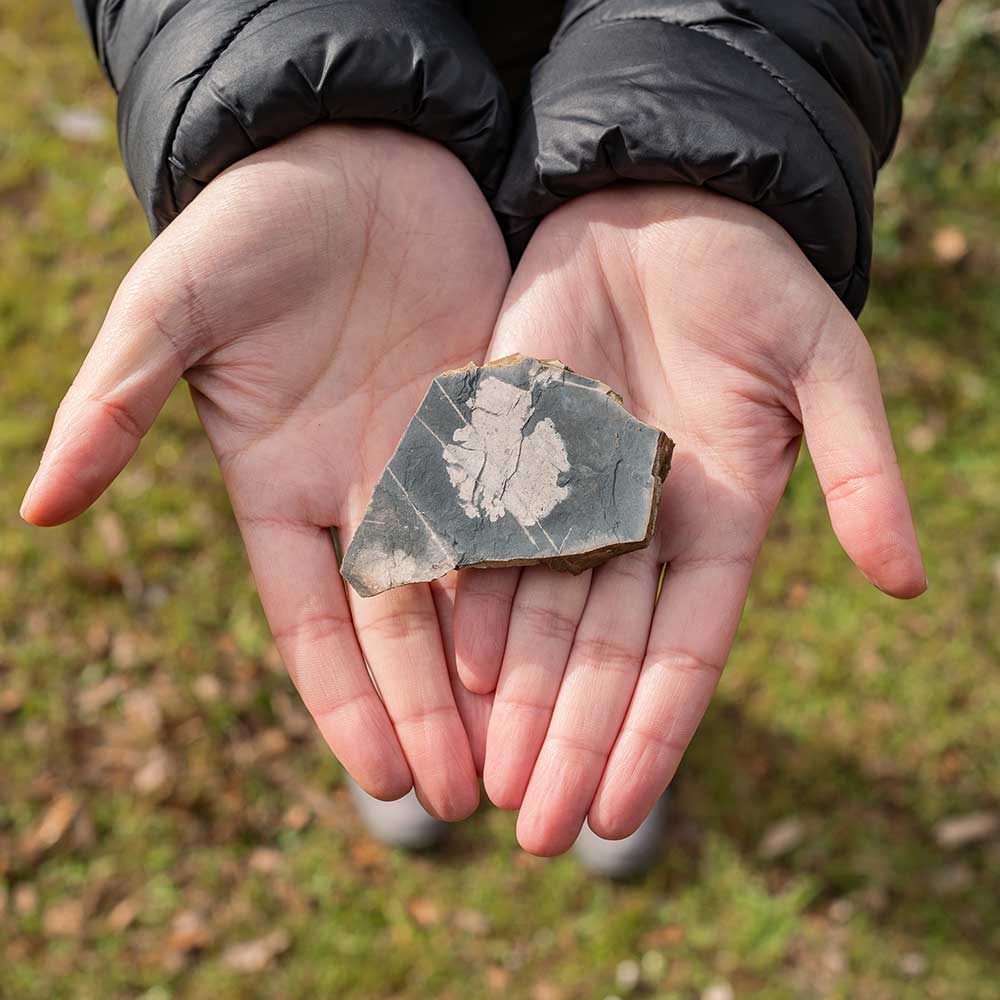
In addition to its archaeological riches, Goni is a must-visit destination for geology enthusiasts and experts alike. In the localities of Peinconi and Cort’e Sa Marra, toothed rod-shaped fossils embedded in shale rocks can be observed: these are Graptolites, dating back to the Palaeozoic era (from 520 to 300 million years ago). These are unique finds that narrate the history of our planet and invite visitors to discover the fascinating marine creatures that once inhabited the primordial seas.
Goni also attracts those seeking a more spiritual dimension. The village is a stop on the Santu Jacu religious pilgrimage route, a path that follows the ancient places of worship dedicated to Saint James across the island, offering pilgrims moments of deep reflection and contemplation through evocative landscapes. Goni is also part of the Santa Barbara Mining Trail, which crosses the ancient mining areas of the Sarrabus-Gerrei region in a blend of ancient faith, history and landscape.
An exceptional combination of richness and rarity of archaeological monuments in a natural environment with a great variety of colors and scents.
A small village with a traditional agricultural past, perched on a plateau offering views of unspoiled nature and splendid sunsets.
SERRI
Surrounded by lakeside landscapes, a museum-town that houses archaeological treasures and characteristic courtyard houses built from local basalt blocks.
ORROLI